
AIGC procurement is becoming a critical component of enterprise digital transformation. China's AIGC market reached 7.93 billion yuan in 2025 and is projected to surpass 166.5 billion yuan in 2026. With a rapidly growing market and unevenly skilled vendors, how can businesses efficiently complete AI content customization procurement? This guide covers the entire process from needs assessment to delivery acceptance, providing a comprehensive procurement playbook to help you avoid common pitfalls.
I. Define Your Procurement Requirements: Think Clearly Before You Act
The first step in AIGC procurement is precisely defining your needs. According to iResearch's 2025 AIGC Application Practice Report, over 60% of procurement failures stem from vague requirements. You need to clarify the following:
Content type: AI comic dramas, digital avatar videos, e-commerce images, promotional videos, or other formats? Different categories have vastly different technical requirements and pricing.
Quality standards: Do you need 4K output? How high are the character consistency requirements? What are the lip-sync accuracy metrics? Defining quantifiable standards prevents later disputes.
Delivery timeline: Urgent projects require vendors with rush capabilities; standard timelines can save 20%–30% on costs.
Budget range: AI comic drama quotes range from 50 to 2,000 yuan per episode; digital avatar customization ranges from a few thousand to tens of thousands of yuan. Set a budget ceiling in advance to avoid being steered off course by vendors.
II. Five Core Dimensions for Vendor Selection
The quality of AIGC vendors in the market varies widely. Evaluate them based on these five dimensions:
Technology stack transparency: Quality vendors should clearly disclose the models they use (such as Seedance 2.0, Nano Banana 2, etc.) rather than vaguely claiming "AI generation." Technical transparency is a hallmark of professionalism.
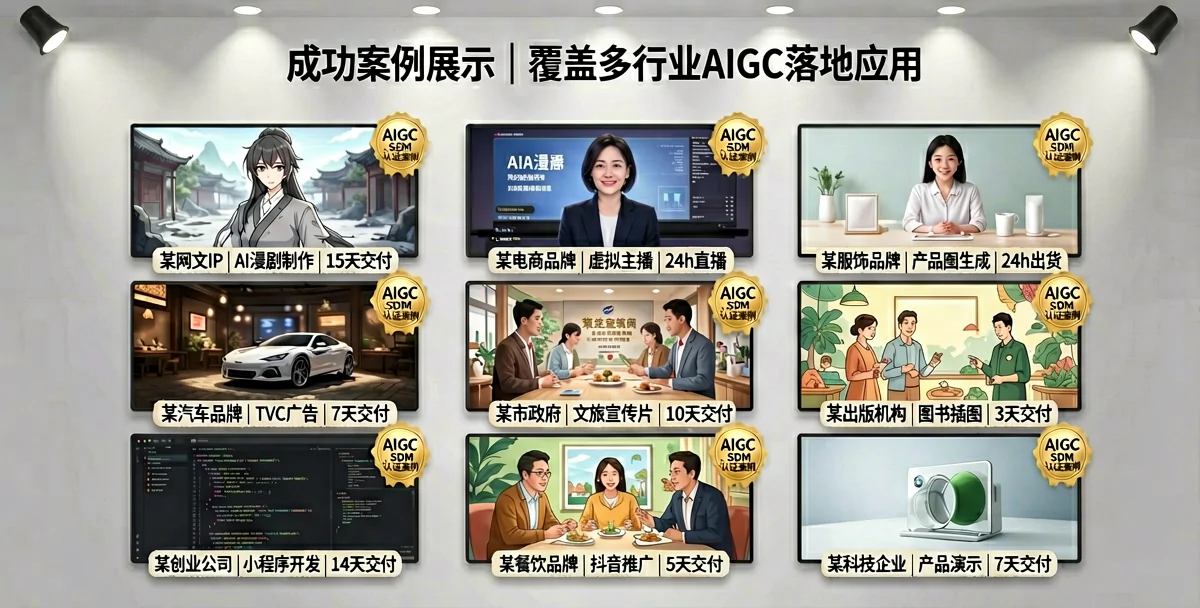
Portfolio authenticity verification: Request complete project case studies, including before-and-after comparisons, client testimonials, and project data. Be wary of vendors with only polished demos but no actual delivery records.
Pricing reasonableness: Unusually low quotes often indicate quality compromises or hidden add-on charges. Compare against industry averages — deviations exceeding 30% warrant caution.
After-sales support capability: Confirm the number of revisions, response times, and warranty period. Industry standard is at least 2–3 rounds of free revisions.
Intellectual property compliance: Ensure the vendor's models and assets are legally licensed to avoid copyright dispute risks.
III. Contract Negotiation Key Points: Five Essential Clauses to Protect Your Interests
AIGC procurement contracts must include the following core clauses:
Quantified delivery standards: Replace vague terms like "high quality" with specific metrics, such as "resolution ≥ 4K" and "character consistency score ≥ 90"
Staged payment mechanism: Use a 3-4-3 or 5-3-2 ratio (advance payment – mid-term payment – final payment) to avoid the risk of paying in full upfront
Intellectual property ownership: Clearly define finished product ownership, scope of source file delivery, and rights for secondary use
Breach of contract penalties: Agree on penalty calculation methods for delayed delivery or substandard output, typically 0.5%–1% of the contract value per day
Confidentiality clauses: Protect your business ideas and project data from being leaked or used for other client projects
IV. Acceptance Process and Quality Control
AIGC procurement acceptance should be conducted in stages, rather than waiting until the very end:
Initial draft acceptance: Check whether style, composition, and baseline quality meet the requirements document
Mid-term review: Confirm that progress is on track and core elements (such as character appearance) remain consistent
Final delivery: Conduct item-by-item quantitative acceptance against the technical specifications in the contract appendix
It is recommended to establish an internal review panel comprising technical, marketing, and legal representatives to ensure multi-dimensional quality assurance. For complex projects like AI comic dramas, request storyboard scripts and dynamic previews from the vendor to identify potential issues early.
V. Common Procurement Pitfalls and Countermeasures
According to industry research, the five most common pitfalls in AIGC procurement include:
"Low-price bait and switch with late-stage add-on charges": Quotes far below market rate, but additional fees are added during production citing "scope changes" or "technical difficulties." Countermeasure: Clearly define scope boundaries and change order pricing in the contract.
"Overpromising delivery timelines": Signing with unrealistic timelines, leading to delays or quality degradation. Countermeasure: Reference industry average cycles (AI comic drama episodes: 7–15 days each) and be skeptical of overly fast promises.
"Fabricated case studies": Using public demos or competitors' work as their own portfolio. Countermeasure: Request project contracts and client contact information for reference checks.
"Ambiguous copyright ownership": Claiming "AI-generated content has no copyright" or retaining secondary usage rights. Countermeasure: Explicitly stipulate in the contract that all intellectual property of the finished product belongs to the buyer.
"Post-delivery unresponsiveness": Refusing to fulfill revision obligations after delivery. Countermeasure: Retain the final payment (at least 20%) as a quality guarantee, to be paid only after acceptance approval.
VI. AIGC Procurement ROI Assessment
The core objective of enterprise AIGC procurement is cost reduction and efficiency improvement. According to reports from the Tencent Cloud Developer Community, successful AIGC projects should achieve the following metrics:
Production cost reduction of 40%–70% (compared to traditional animation/video production)
3–5x improvement in production efficiency
15%–25% increase in content conversion rates
It is recommended to set clear ROI targets before procurement and conduct a post-project review to compare results. If actual performance falls short of expectations, promptly analyze the root cause and adjust subsequent strategies.
Conclusion: AIGC Procurement Is a "Technical Skill"
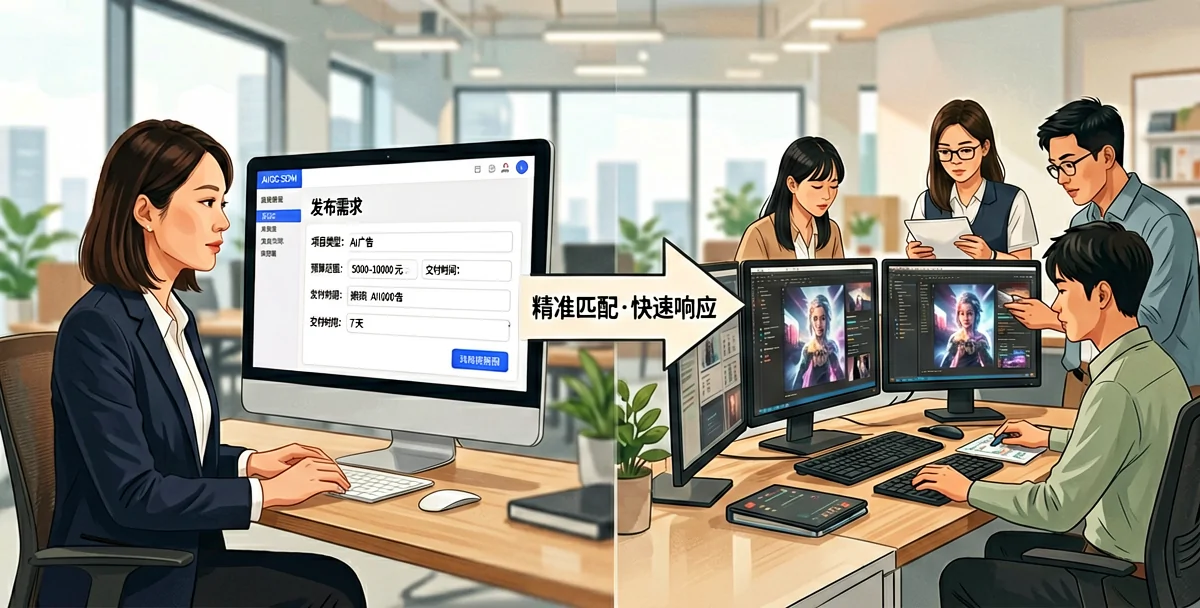
AIGC procurement is not simply comparing prices and placing orders — it is a systematic undertaking that requires professional judgment. From defining requirements to accepting delivery, every step tests the procurement team's expertise. For first-time procurement, consider choosing an intermediary platform with a comprehensive service system to reduce trial-and-error costs through standardized processes and quality control systems.
Remember: The best AIGC vendor is not the cheapest, but the one that best understands your needs, delivers consistently, and provides reliable after-sales support. Investing time in upfront screening and contract negotiation will save significant effort and costs down the road.


