
How Much Does a Corporate Digital Avatar Cost? Full Cost Breakdown and Pricing Guide
With the explosive growth of AIGC technology, digital avatars have become a new standard for brand marketing, e-commerce live streaming, and enterprise services. But with market quotes ranging from "a few thousand yuan for templates" to "millions for custom builds," how can businesses accurately calculate costs? This article provides an in-depth breakdown from two dimensions: visible price ranges and hidden cost components.
I. Market Price Ranges (Single Avatar Customization)
2D / Lightweight Digital Avatars: A Few Hundred to Around 10,000 Yuan
Use cases: Customer service Q&A, short video narration
Delivery timeline: 7–15 business days
Technical features: Text and audio driven, with natural lip-sync quality
Standard 3D Realistic / Cartoon Avatars: 50,000–200,000 Yuan
Use cases: Brand endorsements, offline exhibition interactions, corporate training
Delivery timeline: 20–45 business days
Technical features: High-precision model sculpting, supporting full-angle interaction and real-time rendering
High-Precision Film-Grade Digital Avatars: 100,000–200,000+ Yuan
Use cases: Metaverse events, hyper-realistic live streaming, deep integration with complex business systems
Delivery timeline: 60–120 business days
Technical features: Millimeter-level facial micro-expression capture, physics-based rendering (4K/120fps)
For SaaS platform templates, annual fees typically range from 10,000–50,000 yuan/year, but customization and data privacy levels are lower.
The main price differences come down to: 1. Real-time interaction capability 2. Model detail refinement. Basic digital avatars have fixed movements with text or audio-driven lip-sync, while high-precision avatars offer low-latency real-time interaction with more nuanced and expressive movements and facial expressions.
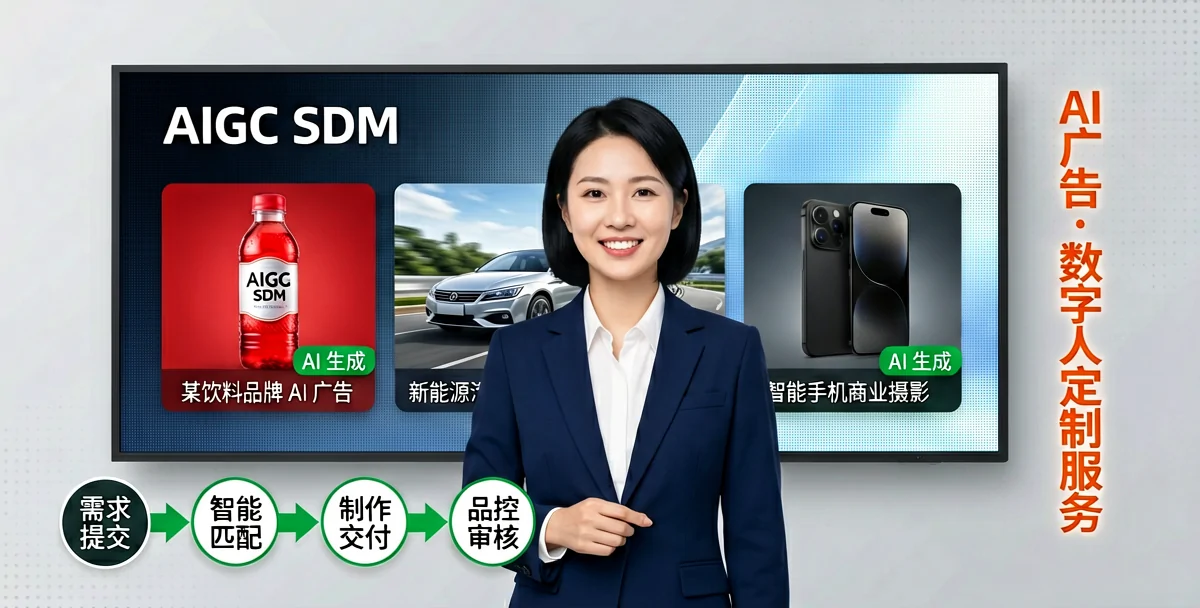
II. Cost Breakdown (5 Major Modules)
1. Pre-Production Planning and Design (~10%–15%)
Character design, brand alignment planning, and turnaround sheet illustration. This stage determines the digital avatar's visual style and personality traits, forming the foundation for all subsequent production.
2. 3D Modeling and Asset Creation (~30%–40%)
High-precision model sculpting, topology optimization, and material texture mapping. This is the highest-cost component, directly determining the avatar's realism and expressiveness.
3. Motion Capture and Expression Driving (~15%–25%)
Facial and body motion capture equipment rental or data collection, lip-sync implementation, and TTS integration. Leading companies like SenseTime have developed "deep synthesis + computation-driven" approaches that eliminate the need for traditional motion capture.
4. AI Engine and Interaction Development (~20%–30%)
Large model integration, multimodal dialogue logic, real-time rendering optimization, and API integration. Achieving real-time driving latency under 200 milliseconds is a key technical threshold.
5. Testing and Deployment (~5%–10%)
Cross-platform compatibility testing, server/cloud rendering resource provisioning, and ongoing maintenance.
III. Hidden Cost Checklist (Often Overlooked by Enterprises)
Model Fine-Tuning Fees: Fine-tuning on industry-specific corpora costs approximately 10,000–50,000 yuan per session
Computing Costs: Private deployment requires GPU cluster investment; SaaS models charge on a tiered usage basis
Copyright and Licensing Fees: Avatar IP ownership, portrait authorization chains, and data privacy protection (financial-grade compliance)
Annual Maintenance Fees: Quarterly model optimization, knowledge base updates, and multilingual expansion, typically 15%–30% of first-year investment

IV. ROI Reference
After a leading cosmetics brand deployed an AI digital avatar, daily poster production cycles shrank from 3 days to 4 hours, with per-unit costs dropping by 75%. Placement data showed that AI-generated assets achieved click-through rates on par with traditional designer work, and in some scenarios exceeded them by 8%.
V. Cost Control Recommendations
For e-commerce live streaming, first test 2D solutions to validate ROI before investing in 3D avatars
Require vendors to provide same-scenario demo tests and computing cost projections
Clearly define copyright ownership, training data usage, and secondary development rights in contracts
SaaS subscriptions suit SMEs needing fast deployment; brand IP operations are better served by private deployment

Conclusion
Corporate digital avatar production is not a simple technology purchase—it is a strategic-level investment. We recommend evaluating options across four dimensions: use case (online/offline), interaction depth, data compliance level, and budget cycle, to select the solution with the best cost-effectiveness.
Price ranges in this article are based on real industry research from 2025–2026. Market data sourced from the Huajing Industrial Research Institute's "2024–2030 China AIGC Industry Development Monitoring and Trend Forecast Report."


