
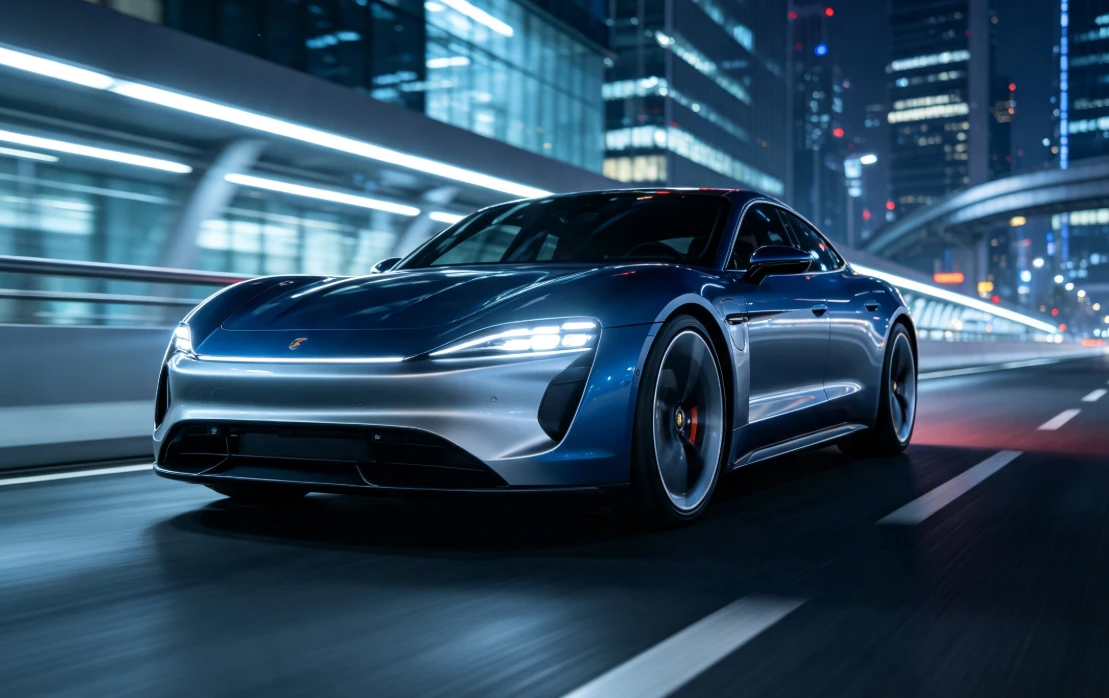
An automotive TVC is not finished just because the car looks attractive in a still image. The final impression depends on paint reflections under changing light, body proportions, wheels, lighting units, interior materials, and whether driving, turning, and braking remain believable. This is why AIGC car commercial pricing is usually higher than the price of a standard e-commerce product TVC.
Why automotive commercials need more control
A typical product clip may only need to show the item and its use. A car is a complex industrial object. Exterior shots need to preserve the model, color, paint, glass, metal, and tires. Interior shots need control over screens, seats, displays, switches, and ambient lighting. Motion shots also need coherent wheel movement, road contact, tracking, and a sense of speed. Component animation, mechanical explanations, or data visualization add further production work.
AI can help explore concepts, visual styles, and selected motion shots. Higher-requirement work still needs vehicle references, brand rules, a shot list, and retouching in one controlled workflow. Confirm the permitted use of badges, model-specific features, license plates, dashboard content, and music before production. Late-stage reviews are much smoother when those boundaries are clear.
Reference pricing for one automotive TVC
Using the CNY range supplied for this project and the exchange rate checked on August 6, 2026, an AIGC automotive TVC is roughly US$740 to 4,440 per finished film. A brief with complete vehicle materials, fewer shots, and a mainly stylized presentation often sits nearer the lower end. A custom script, precise vehicle recreation, several driving shots, exterior and interior transitions, component animation, or multiple deliverables increases the budget. Location shooting, hybrid live action and AI imagery, high-end grading, and complex post-production can exceed this range.
This is a planning reference, not a fixed market rate. Runtime, the completeness of vehicle data, available 3D assets, revision rounds, delivery resolution, campaign territory, and rights scope all affect the quote. State the vehicle, audience, core message, visual direction, distribution channel, and deadline before comparing proposals.
Review the direction, then request a real quote
Good automotive work is often easy to recognize. Check whether the shots communicate the product accurately, whether the car stays stable in motion, whether interior and exterior details hold up, and whether the edit matches the brand. To browse related examples, view AI automotive TVC ad cases.
For a real quote, post a project brief on the AIGCSDM supply-and-demand marketplace and let production teams respond to the budget and conditions. The platform does not take a project commission, and both parties coordinate offline to confirm the contract and delivery responsibilities. Compare samples, vehicle fidelity, revision scope, asset rights, and final deliverables alongside the total price.


