
Once a company sees an AI tool generate video, the first question is often: should we do this ourselves? The answer depends on more than whether someone can operate the tool. Ask how much trial and error the video can tolerate, whether anyone in-house can turn product information into a script and shots, and whether the final piece will represent the brand publicly.
Simple content can stay in-house
For a social post, event teaser, internal presentation, or early concept test, in-house production may be faster. The copy, assets, and publishing channel are clear, and the video does not need every frame polished. The goal at this stage is to find out whether the idea works, not to build a fully finished commercial piece on the first attempt.
There is still a cost to doing it yourself: learning and rework. Opening the tool is easy. Time goes into testing prompts, fixing people and product details, repairing disconnected shots, and editing scattered outputs into a coherent video. For a team that only makes one occasionally, the hours spent figuring out the workflow can exceed the cost of hiring help.
Brand content and complex shots usually need a team
When a video is for brand promotion, a product ad, a sales presentation, or an ongoing series, the standard rises. The concept must serve a communication goal, the storyboard must make the message clear, and people, products, and environments need to remain stable across shots. Voice, captions, music, and delivery specifications also need attention. Knowing how to call a model is rarely enough to manage the full chain.
This becomes clearer when the product must be represented accurately or the video includes complex motion, several interacting people, unusual materials, or high-dynamic scenes. Generation is only one stage. A production team still has to design shots, select usable outputs, repair defects, edit, package, and check delivery files. Hiring a team with directing and post-production ability buys a workable process and makes rework easier to control.
Many projects work best as a hybrid
A company does not have to choose between doing everything itself and handing everything away. The client usually knows the product information, brand rules, core selling points, and internal approval requirements best. A production team can take on the creative proposal, storyboard, difficult shots, voice, and post-production. The client keeps control of the message while the team handles the parts that invite technical trial and error.
This approach is especially useful for content that needs regular updates. The company and the team can first lock the characters, environments, visual style, or product assets, then extend them for different campaigns. The initial setup can be reused, so later communication does not start from zero for every video.
Clarify these points before outsourcing
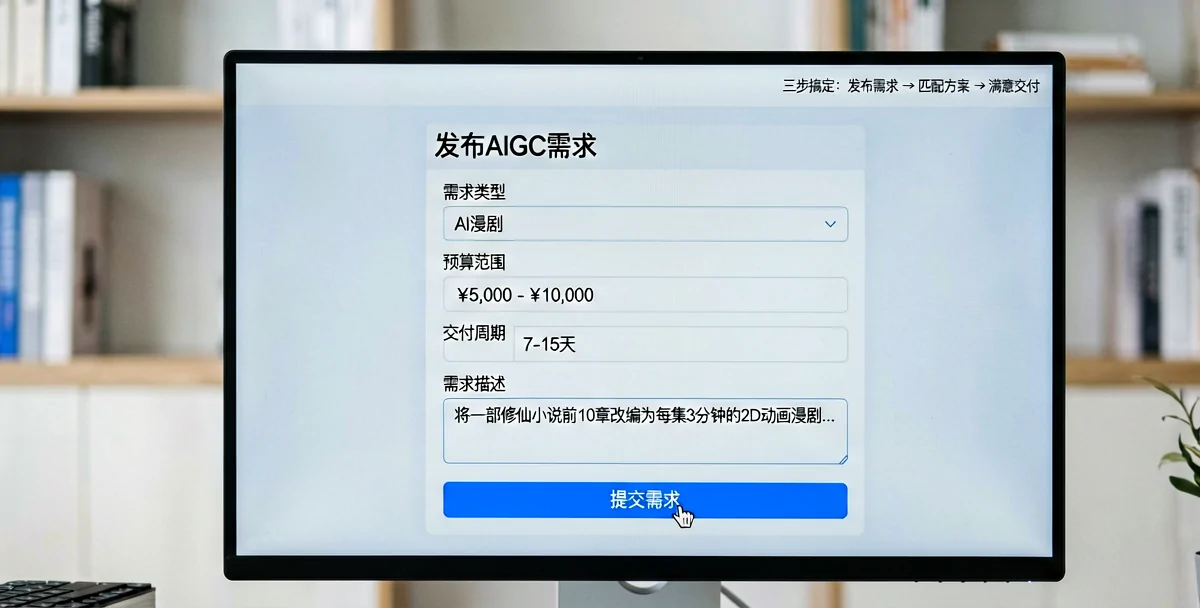
Before contacting a team, define where the video will be used, who will watch it, its expected runtime, the required format, and any product assets or brand rules that must be followed. Prepare two or three references that are genuinely close to the target, and explain whether you like the rhythm, visual style, camera work, or way of presenting information. A budget range helps, but so do the quality floor and the outcomes you cannot accept.
The clearer the brief, the easier it is for a team to estimate the work and for the buyer to compare proposals. At that point, browse an AI video production team directory for relevant work and capability, then discuss proposals against the same brief.
AI video outsourcing does not mean handing every decision to someone else. Try simple content in-house, hire specialists for complex work, and use a hybrid model for ongoing production. The useful decision starts with the actual needs of the project. Time spent on creative and business judgment is often more valuable than several days spent learning a workflow the team will rarely use.


