
In the past, a tourism promotional video required filming first, editing second, then separately producing Chinese, English, Japanese, and Korean versions—high costs and long timelines all around. By 2026, cultural tourism content production is increasingly adopting AI scripts, text-to-video, image-to-video, AI voiceover, multilingual subtitles, and digital avatar narration, making it suitable for scenic spot pre-launch campaigns, city investment promotion, cultural heritage outreach, hotel and B&B marketing, and overseas social media distribution.
Multilingual Videos Are About Localization, Not Just Translation
When AI promotional videos are used for cultural tourism, simply mechanically translating the Chinese narration into other languages is not enough. For English-speaking tourists, the video should highlight routes, experiences, and safety information. For Southeast Asian tourists, it can emphasize family activities, photo opportunities, and short getaways. For Japanese and Korean tourists, the focus should be on attentive service, seasonal landscapes, and cultural authenticity. AI can speed up production, but scripts still need to be restructured by someone who understands tourism conversion.
How the 2026 Tech Stack Works Together
On the visual side, video generation tools like Sora, Veo, and Runway can create atmosphere shots, transitions, and historical scene reconstructions, or combine live-action footage, aerial photographs, and archival scenic photos with AI-generated shots to avoid an overly artificial look. On the audio side, multilingual TTS, AI voiceover, subtitle translation, and audio-visual rhythm calibration produce English, Japanese, Korean, Thai, and other versions. For a more authentic presenter feel, digital avatar narration with multilingual lip-sync adaptation can be added.
A production-ready AI tourism short film typically starts by defining the target market, video length, distribution platform, and aspect ratio, then writing the master Chinese script. From there, foreign-language scripts, storyboard prompts, visual assets, narration audio, subtitle files, and the final cut are generated. Short-video platforms prioritize the first three seconds, while official website and exhibition versions need to emphasize city character, scenic routes, and brand credibility.
Compliance and Authenticity Are Non-Negotiable
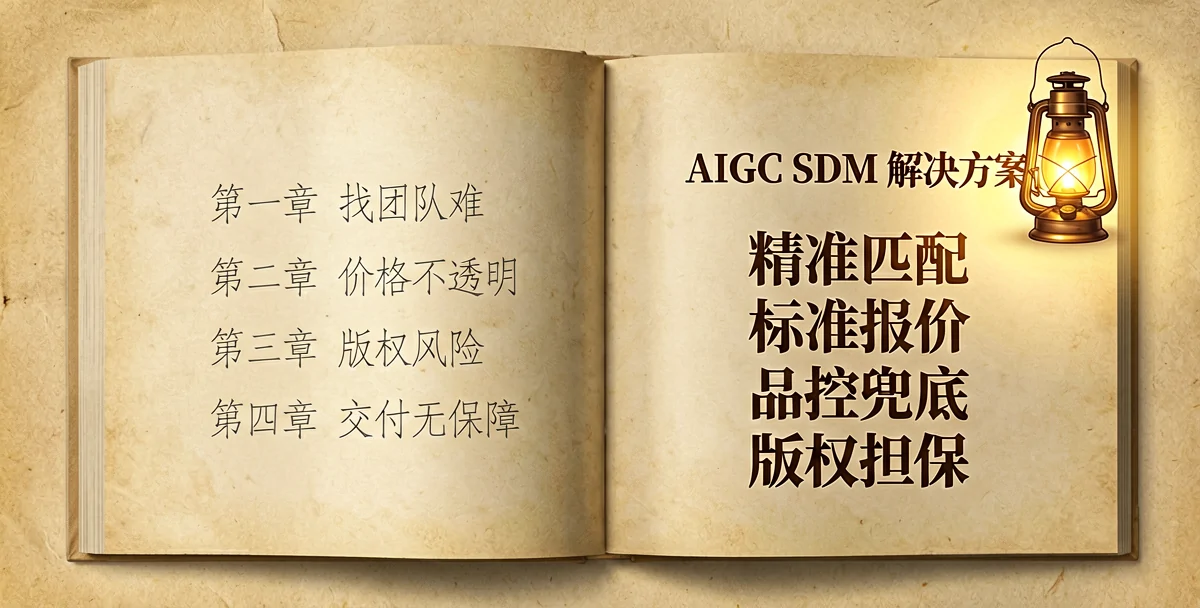
Cultural tourism content cannot freely fabricate place names, historical figures, cultural heritage lineages, or scenic facilities. Any AI-generated images, audio, video, or virtual scenes should be properly labeled as generated synthetic content per relevant regulations. For overseas distribution, translated text must be checked for cultural misinterpretation, and information about ticket prices, transportation, and opening hours must not be exaggerated. AIGCSDM can match script planning, AI video generation, digital avatars, multilingual voiceover, and post-production editing teams within a single project, and through draft confirmation, per-language review, and final acceptance, upgrade tourism promotion from "one video" to "a deployable multilingual content asset suite."


