
Real estate advertising has to do two jobs at once: help buyers picture a future lifestyle and remain faithful to the actual development. A conventional shoot is persuasive when it shows the building, landscaping, model unit and surrounding area as they really are. It also carries the cost of scouting, crew, equipment, talent, drone work, access and scheduling. Bad weather, an unfinished sales suite or a request for both sunrise and night scenes can add waiting days and reshoots.
AI reduces selected production costs, not the entire budget
Generative production is particularly useful for shots that are difficult to schedule. Using approved project material as a reference, a team can develop changes in time of day, seasonal atmosphere, lifestyle scenes and conceptual transitions. It can also test several visual directions and produce landscape, vertical or localized versions faster. Some shots that once required a set, talent and very specific light can therefore move to a digital workflow.
The expense does not disappear; it moves. Money saved on location work is redirected to concept development, scripts, storyboards, asset preparation, generation, selection, correction and compositing. A beautiful frame is still unusable when the tower proportions, window pattern or landscaping no longer matches the property being promoted.
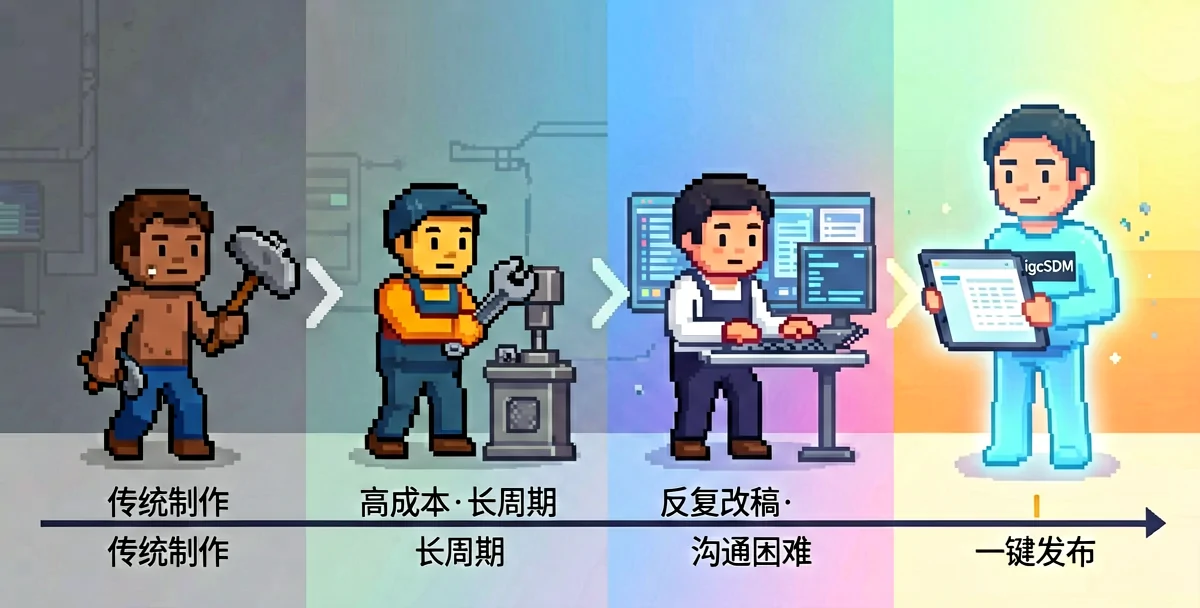
Traditional and AI quotes are not directly interchangeable
A public quote can provide context without defining the whole market. In 2025, Chinese production company Sundbetom published an indicative price of RMB 20,000 to RMB 50,000, roughly US$3,000 to US$7,400, for a three-to-five-minute property video. It is one supplier's service estimate, not an industry-wide rate. Shooting days, talent, drone permits, travel and post-production requirements can move the figure considerably.
For an AI-led real estate advertisement, an indicative project range is about RMB 5,000 to RMB 30,000, or approximately US$740 to US$4,450 at recent exchange levels. Projects near the lower end usually start with organized property assets, use fewer shots and focus on atmosphere, clear information and basic finishing. Higher budgets tend to include original creative development, more involved human activity, precise architectural matching, hybrid live-action and generated footage, professional sound and color work, and additional formats or deliverables. These figures describe different scopes and cannot prove that AI is always cheaper by a fixed percentage. Its clearest cost advantage appears when conceptual and atmospheric shots make up a meaningful part of the film.
Accurate source material makes generated imagery controllable
A reliable brief should include approved renders or current photography, drone footage, a site plan, floor plans, model-unit images, landscaping references and verified information about the neighborhood. It should also distinguish completed features from planned ones. Development names, locations, dimensions, amenities and delivery specifications should be typeset in post-production from approved copy, never left for an image model to invent.
A hybrid method is often the sensible choice. Real footage establishes what exists; AI expands hard-to-capture times, weather and lifestyle situations; post-production unifies color, maps, captions and brand elements. Any detail that could affect a buyer's decision, including room dimensions, tower placement and facility status, must remain tied to verified material. Visual polish is not a reason to add amenities or scenery that the project does not have.
Separate creative freedom from factual accuracy before requesting quotes
A conceptual brand film, a video for a completed property and a visualization of a development under construction require very different methods. A useful request should state runtime, channels, available assets, the live-action ratio, elements that must be reproduced exactly, the number of people-focused scenes, aspect ratios and revision rounds. Suppliers can only produce comparable proposals when they receive the same scope.
To explore visual directions or identify potential production partners, browse AI-generated real estate advertising examples. AIGCSDM serves as a practical connection point between a brief and suitable teams. The final price will still be set by the quality of the source material, the amount of live-action truth the film must preserve and the level of control expected in every shot.


